Mid Brain Activation for Kids: Real or Fake? What the Brain Guruji Founders Say
Described in the episode as the founders of the Brain Guruji app. Kapil Sharma says he went through depression, then studied NLP, hypnosis and neuroscience ideas and ran student workshops before the team built the app.
Mid brain activation for kids is one of the most searched and most argued topics in Indian parenting. On The Sarvesh Mishra Show, Sarvesh Mishra sits down with Kapil Sharma and Akash Patel and asks them directly. This blog gives you their claims in their words, then adds a reality check.
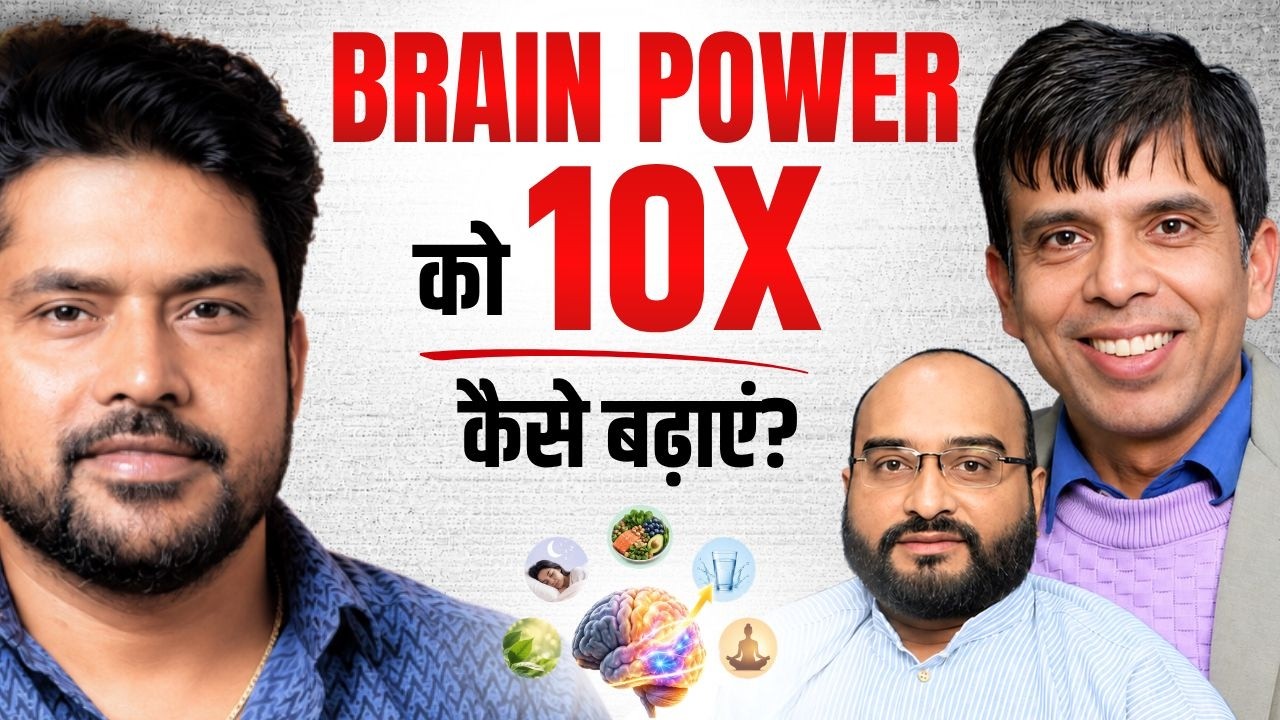
अपने दिमाग की ताकत 10X बढ़ाए | Kapil Sharma & Aakash Patel Reveal Money Mindset Secrets 2026 · 61 min 50 sec
Who is this for? Parents, teachers and students who have seen blindfold videos or memory workshop ads and want a straight answer.
Why do the founders say they built this?
Kapil Sharma says he went through depression himself. After finding training connected to the brain, he studied NLP, hypnosis and neuroscience ideas and began running workshops for students. Results, he says, were strong, but classrooms could not reach every home. So the team built an app.
The problem they point to is serious. They say 70 percent of students in India face stress, and they mentioned a fifth grade child in a reputed Jaipur school who died by suicide. They also named social media, mobile addiction and weak bonding with parents as causes. Those figures and that case are their telling of events, not independently verified here.
What is brain gym, and can parents try it at home?
Kapil Sharma showed a simple move on air: both hands doing different actions at the same time, like one hand moving forward while the other moves backward. It feels surprisingly hard, and that is the point. He says it builds focus by making both sides of the brain work together.
Such coordination games are fun, safe and can help attention and motor skills. You can try one with your child tonight.
Can you really train photographic memory?
The founders claim that recall improves with practice, and that imagination is a skill that can be trained. They said even Swami Vivekananda was known for fast reading and strong memory. Memory methods such as visualisation and association are well established in learning, and many toppers use them.
Trataka: the focus trick your grandparents knew
Trataka means gazing at one point without blinking. The guests say it calms scattered thoughts and helps information move into long term memory. Meditation style focus practices are widely studied for attention and stress, though results differ from person to person.
Hypnosis, the hidden wall and the money blockage
Akash Patel gave one of the most interesting explanations in the episode. In his view, the mind has three parts:
| Part | His description |
|---|---|
| Conscious mind | Thinks, analyses and holds short term memory |
| Critical mind | A wall that blocks new ideas from reaching the subconscious |
| Subconscious mind | Stores habits, emotions and beliefs |
His example: children hear “money does not grow on trees” again and again, and that repetition can become a money blockage in adult life. Hypnotherapy, he says, relaxes the critical mind so new suggestions can be given. He also stressed that stage tricks like breaking bulbs or tiles are not what their program teaches.
The big claim: blindfold vision and the pineal gland
This is the part everyone wants to know about. The founders say the pineal gland, a rice grain sized organ in the centre of the brain, can be activated, which helps develop what they call extra sensory perception. They claim about 95 percent of children in their program show results in blindfold activities, and a lower rate in adults. They also said real third eye awakening is a deep spiritual practice that no short workshop can give.
So is it real? Read the next section.
Myth or fact: a reality check for parents
| Claim in the episode | What to know |
|---|---|
| About 99 percent of brain power sits in the right brain | Neuroscience does not support strict left brain or right brain types, or that one side holds most of the power. Both sides work together. |
| The pineal gland can be activated to read or see blindfolded | The pineal gland helps regulate sleep through melatonin. There is no scientific evidence it can be activated for blindfold vision, and sceptics often explain such shows through peeking. |
| Hypnosis can solve any psychological problem, including OCD and depression | Some clinicians use hypnotherapy as a supporting therapy for certain issues. It is not a cure for every condition and should not replace medical treatment. |
| The program has no side effects | Any program can cause pressure, false hope or delays in getting real help. Ask about safety and who delivers it. |
| 90 to 95 percent success | These are self reported figures, not independently verified here. |
To their credit, the founders told viewers not to simply believe them, and to check and test claims. Parents should do exactly that.
The success stories they shared
- Shivani Kaur: reportedly went from 55 to 60 percent in maths to 99 percent after 20 days of daily practice with her father involved.
- A Mumbai customs officer’s daughter: reportedly scored 35 out of 40 in maths after scoring very low before.
- Shreyansh Jain from Agra: reportedly reached state level cricket selection.
- Raman Sharma from Jaipur: reportedly a national level shooter who trains blindfolded.
These are the founders’ accounts. One family’s result does not guarantee yours.
Spirituality or science?
Host Sarvesh Mishra asked why they present ideas from Indian spiritual tradition as science. Akash Patel replied that ancient India had sammohan chikitsa, but the world only paid attention when the West called it hypnotherapy. He said people often accept ideas only when they carry a scientific or foreign label, so they use that language. Kapil Sharma added that spirituality is the foundation that balances success with inner peace.
What parents can actually do: the 10 minute plan
The most useful advice from the episode is simple, and costs nothing.
- Give 10 minutes of daily quality time. The founders say parent involvement decided the best results.
- Practise daily. A two day workshop is not enough, they say. Treat it like a daily diet for the brain.
- Cut screen time slowly and replace it with sport, music and conversation.
- Try focus habits: trataka, slow breathing, visualisation and short brain gym moves.
- Protect sleep, since good sleep helps memory and mood.
- Watch emotional signals and seek professional help early.
Five questions to ask before you pay for any brain program
- What evidence supports the claims?
- Who teaches it, and what are their qualifications?
- Does it discourage medical care or counselling?
- Can we try it cheaply or for a short time first?
- What do other parents say?
- Brain Guruji is an app that teaches brain gym, memory, focus and relaxation practices to children and adults.
- The founders say daily practice with parent involvement matters more than one time workshops.
- Memory techniques, trataka and coordination games are safe habits worth trying.
- The strict left brain and right brain claim is not supported by research.
- There is no scientific evidence that pineal gland activation allows blindfold vision.
- Hypnotherapy may support therapy but must not replace professional treatment.
- Always verify results and credentials before paying for any program.
Frequently asked questions
What is mid brain activation for kids?
It is a claim, popular in workshops, that training can activate the mid brain and pineal gland so children can sense objects with covered eyes. There is no scientific evidence for this.
Who are the host and guests in this episode?
The host is Sarvesh Mishra. The guests are Kapil Sharma and Akash Patel.
What is Brain Guruji?
An app that teaches brain gym, memory, focus, meditation and hypnosis based practices to kids and adults.
Is blindfold reading real?
The founders say it can be trained. There is no scientific proof, and sceptics say peeking explains most demonstrations.
What are brain gym exercises for kids?
Simple coordination activities, such as moving both hands in different patterns, meant to build focus.
Can photographic memory be trained?
Memory techniques like visualisation and association can improve recall for many people. Results vary.
Can hypnotherapy help students?
Some clinicians use it for relaxation and stress. It is not a replacement for medical care.
How can I reduce mobile addiction in my child?
Set screen limits, spend daily quality time and replace screen time with activities. The founders say their 21 day challenge cuts it by about 90 percent, which is their own claim.
What age is the program for?
They say ages 6 to 16 or 17 have one program, and adults have another.
Is it safe?
The founders say there are no side effects. Parents should still ask about qualifications, avoid replacing medical care and watch their child’s wellbeing.
Watch the full conversation
Is mid brain activation for kids real or fake? The honest answer from this episode is: the daily habits are real and useful, but the headline blindfold claim does not have scientific proof. What does work, according to the founders themselves, is ten minutes of your time, every day. Try the safe habits, question the big promises and get professional help for serious emotional concerns.
अपने दिमाग की ताकत 10X बढ़ाए | Kapil Sharma & Aakash Patel Reveal Money Mindset Secrets 2026
Kapil Sharma on Instagram: @kapilhappinesscoach.