The Sarvesh Mishra Show · Episode 12 · Business & Entrepreneurship
How to Become Debt Free in India: Raghav Kumar Garg Explains Loan Repayment, EMI and Financial Freedom
Guest: Raghav Kumar Garg, Finance Expert — SEBI registered research analyst; founder, Raghav Research Services LLP
Host: Sarvesh Mishra · The Sarvesh Mishra Show
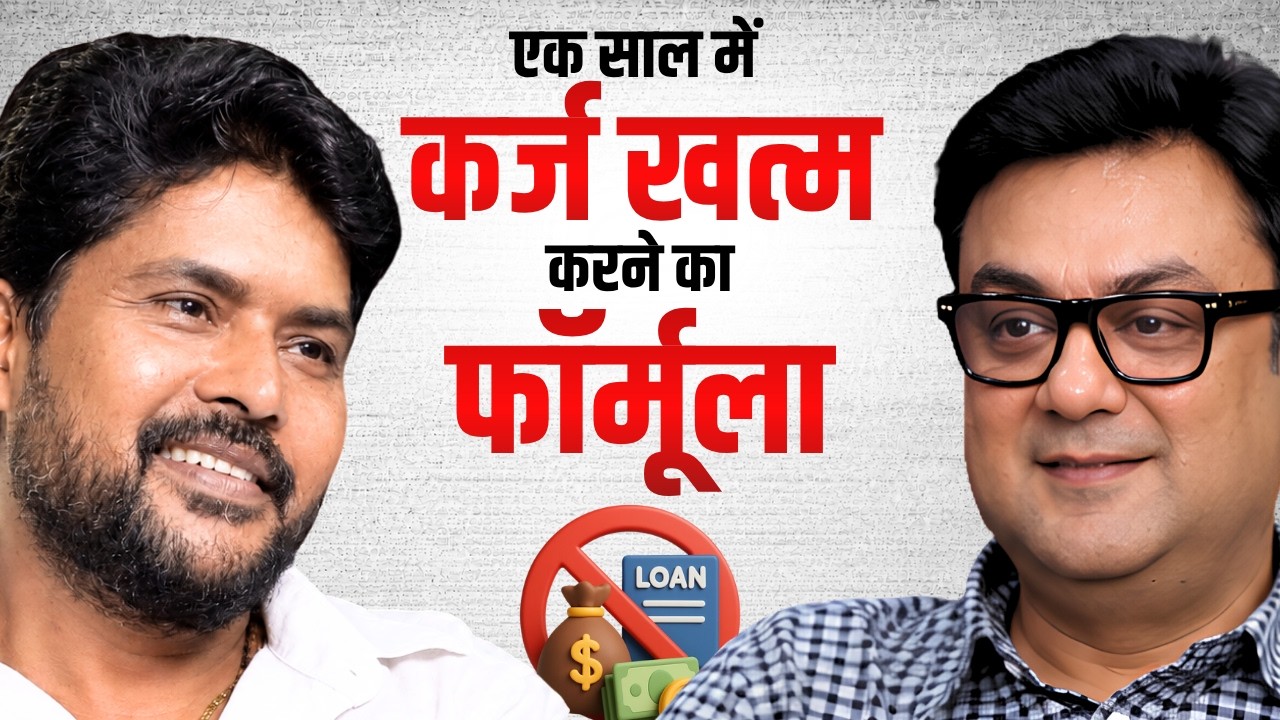
Watch: 1 साल में कर्ज़ मुक्त कैसे बनें — सबसे आसान तरीका | Raghav Kumar Garg | Sarvesh Mishra Podcast (~67 min)
In this episode of The Sarvesh Mishra Show, Sarvesh Mishra speaks with finance expert Raghav Kumar Garg about debt management, loan repayment, credit cards, EMIs, good debt and bad debt, emergency funds, CIBIL scores, investing and financial freedom. Read the show explainer at What Is The Sarvesh Mishra Show?
This conversation sits in Sarvesh's Media & IP archive. For related money episodes on this show, see Sanjay Kathuria on SIP investing and Sagar Sinha on The Real Rich. Browse the guest index or the full writings archive.
This write-up is educational. It is not investment advice. Stock market investments are subject to risks. Do your own research or consult a SEBI-registered financial advisor before making financial decisions.
Why Do People Fall Into Debt?
Raghav Kumar Garg explains that the real problem often comes from miscalculation. People may borrow for lifestyle expenses, take another loan before clearing an earlier one, or assume that future income will solve today's repayment burden.
The first step is therefore to identify the root cause.
Good Debt vs Bad Debt: What Is the Difference?
One of the central ideas in the conversation is that debt itself does not automatically make a person poor. The purpose and calculation behind the debt matter.
Raghav explains the distinction through net worth. If borrowing helps build an asset or supports productive activity and the repayment is comfortably affordable, it may contribute to wealth creation. If borrowing mainly funds lifestyle spending that a person cannot afford, it can weaken savings and financial stability.
Home loans, education loans and some business loans can serve productive purposes when properly planned. By contrast, using expensive credit for unnecessary purchases, travel or lifestyle upgrades can create long-term pressure.
How to Repay a Loan Faster
For borrowers who can comfortably manage their EMI, the conversation highlights an extra payment strategy.
Raghav explains that making one to three additional EMI payments in a year can help reduce the principal faster. The exact impact depends on the loan terms, interest rate and lender rules, so borrowers should confirm the calculation with their lender.
The logic is important. An additional payment directed toward principal can reduce the outstanding balance and therefore reduce future interest. This can potentially shorten the repayment period.
Always check the lender terms before making extra payments.
What Is the Biggest Loan Mistake?
A major mistake is taking new debt before understanding whether the existing debt is under control.
If a business loan is producing enough income to support its EMI, another borrowing decision may be evaluated differently from a situation where the original loan is already difficult to service.
A stronger approach is to calculate the repayment using realistic assumptions and then test what happens if income falls or expenses rise. For another founder conversation on starting with limited capital, see Ashish Agarwal on building a business with ₹1 lakh.
How to Get Out of Debt
Raghav's suggested starting point is to recalculate the entire financial situation and identify the root problem.
- List the loans, EMIs and obligations.
- Understand why the debt increased.
- Stop repeating the behaviour that created the problem.
- Evaluate whether additional EMI payments can reduce the principal.
- Speak to the lender when repayment genuinely becomes difficult rather than waiting until the situation becomes severe.
Why Credit Cards Can Become a Debt Trap
The discussion highlights how credit cards can become dangerous when people use them for purchases they cannot comfortably afford or treat the available limit as additional income.
Raghav also strongly questions the idea of borrowing through a credit card and investing that borrowed money in the hope of earning a higher return within a short period. Investment returns are uncertain, while repayment obligations are real.
The safer principle is to invest money that belongs to you and that you can leave invested according to your financial plan.
Emergency Fund and EMI Planning
An emergency fund should be considered before taking on a major EMI, according to the discussion.
The purpose of an emergency fund is to protect essential expenses if income suddenly falls. Raghav describes a minimum six-month buffer based on a person's lifestyle expenses and says a larger reserve may be appropriate for greater uncertainty.
Loan Settlement and CIBIL Score
Loan settlement is discussed as a serious financial lesson rather than a routine strategy. If a borrower repeatedly settles loans because repayments are not manageable, the underlying financial behaviour has not been corrected.
Anyone facing genuine repayment difficulty should speak directly with the lender and understand the available options instead of assuming that settlement is an easy shortcut.
Should You Take a Business or Startup Loan?
For a business or startup, borrowing should be connected to a realistic plan and a clear understanding of risk.
Raghav explains that a startup has uncertainty by definition. An idea may look strong on paper but still perform differently once customers respond to it.
His practical message is to avoid going all in with debt. A borrower should understand how much repayment the business can realistically support and maintain a backup plan for a worst-case situation.
For business purposes, a dedicated business loan may offer different terms and facilities from a personal loan, but the correct choice depends on the borrower's situation and lender conditions.
What Is the Right Investment Mindset?
The conversation moves from debt management to investing because the two are closely connected.
Raghav discusses the importance of time, diversification and emotional discipline. Mutual funds and index-based investing can be considered by people who do not have the capital or knowledge to build a diversified direct stock portfolio themselves. That sits next to Sanjay Kathuria on SIP behaviour and mutual funds.
He describes several psychological factors that can influence investors, including intelligence, emotions, adversity and social influence. A good investment decision can still face a bad market period, so patience and a clearly defined plan matter.
How Can Young People Build Financial Freedom?
Financial freedom does not necessarily mean never working again. In the conversation, Raghav describes financial independence more practically as having enough control over your finances that you do not constantly need to borrow from others for everyday needs.
Even a modest regular investment can build the habit of investing. The amount may change as income grows, but consistency creates a financial routine. For another take on wealth versus display, see Sagar Sinha on The Real Rich.
For young people, the important lesson is not to wait until they earn a large salary before learning about money. Understanding debt, saving, investing and risk early can improve future financial decisions.
A clear debt plan should protect essential expenses, avoid unnecessary borrowing, preserve financial resilience and create measurable progress toward lower balances without creating a new cycle of debt.
Key Takeaways
- Becoming debt free starts with understanding why the debt was created.
- Debt can be useful when it is carefully calculated and connected to a productive purpose.
- Extra principal payments may help eligible borrowers reduce loan interest and tenure.
- Credit card borrowing can become expensive when used without repayment discipline.
- Emergency planning should be considered before taking on major EMIs.
- Business borrowing requires realistic calculations and a backup plan.
- Financial freedom begins with consistent money habits, patience and informed decisions.
Hosted by Sarvesh Mishra. Follow Raghav on Instagram and YouTube.